Best Of
How To Measure Customer Feedback With Semantic Differential Scale

Article written by Kate Williams
Product Marketing Manager at SurveySparrow

9 min read
30 May 2024


Best Of
Article written by Kate Williams
Product Marketing Manager at SurveySparrow
9 min read
30 May 2024
Remember those pop-up survey notifications whenever you order food from your favourite app? That pop-up always asks you to rate your food on a scale from 1 (“ew”) to 5 (“yum”). That is a basic example of a semantic differential scale.
Now, customer satisfaction surveys are a great way to understand what customers think. But to truly know your customer (any kind of respondent really) you need to know what they feel. Traditional feedback surveys are limited in that area. So here’s how you can measure emotional feedback with the semantic differential scale.
Let’s go back to the 1940s and a psychologist named Charles E. Osgood.
While trying to understand how connotations* work, he found that three types of meanings are universally understood regardless of culture or language. These types are:
That’s how the semantic differential scale was born. A semantic differential scale is a range of values that indicate feelings towards a subject. The scale arranges these values as levels in a 5-point or 7-point scale. The most extreme values (called “anchors”) are at opposite ends of the scale.
*Side note:
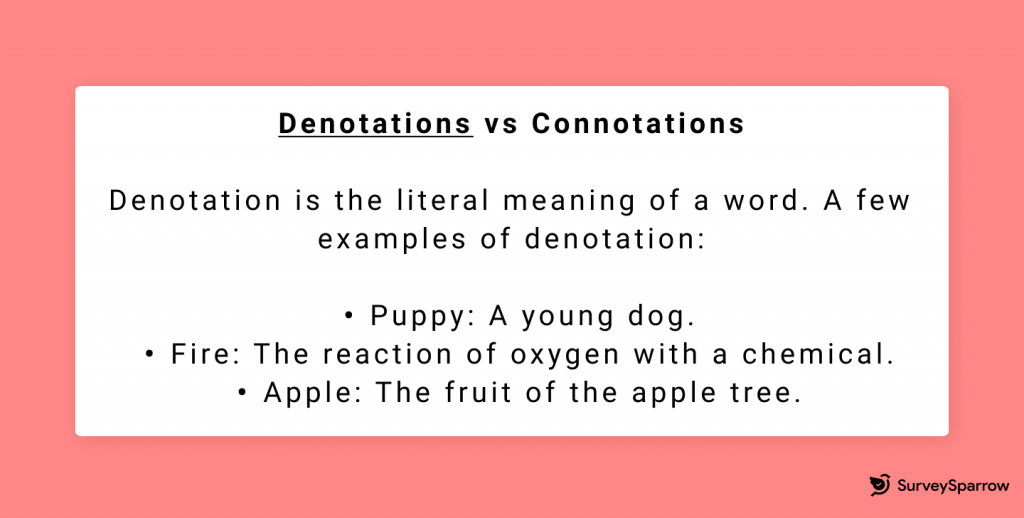
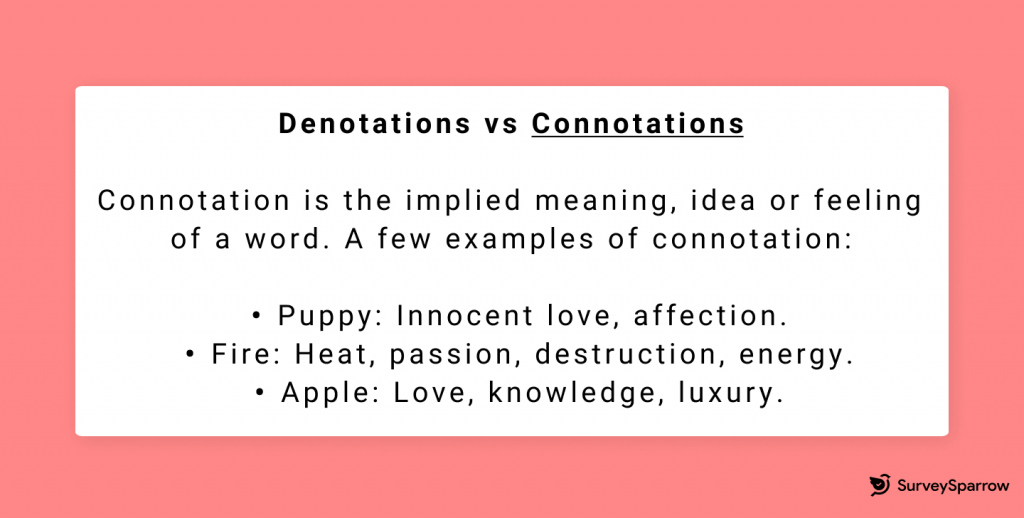
We use a semantic scale to gauge our perceptions about a particular subject – including feelings and ideas.
A semantic differential scale is one of the best ways to understand a person’s attitude to any topic. This tool makes it possible to logically measure emotional aspects like an individual’s experience, satisfaction, feelings, or outlook.
While traditional semantic differential scales offer valuable insights, creating and managing them can be cumbersome. Perhaps SurveySparrow can help you.
With the platform, you can create interactive surveys that dig into people’s feelings and attitudes towards anything – whether it’s a product, service, or even a new idea. It’s like having a window into people’s minds and hearts!
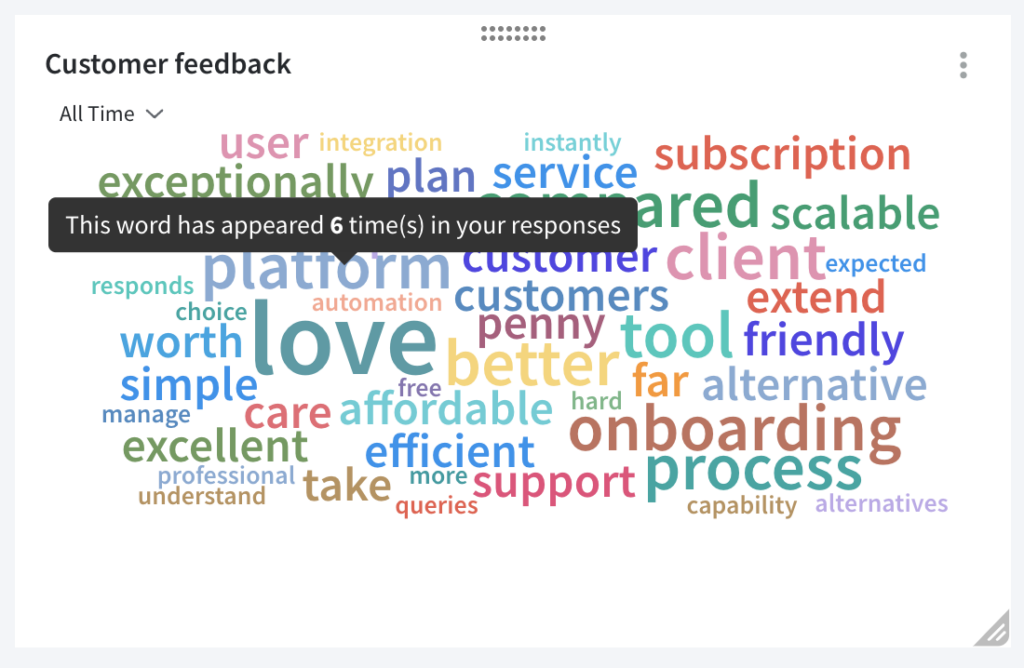
Also, use the word cloud to better understand the “why” behind the ratings, pinpointing specific areas for improvement.
Why don’t you try it today?
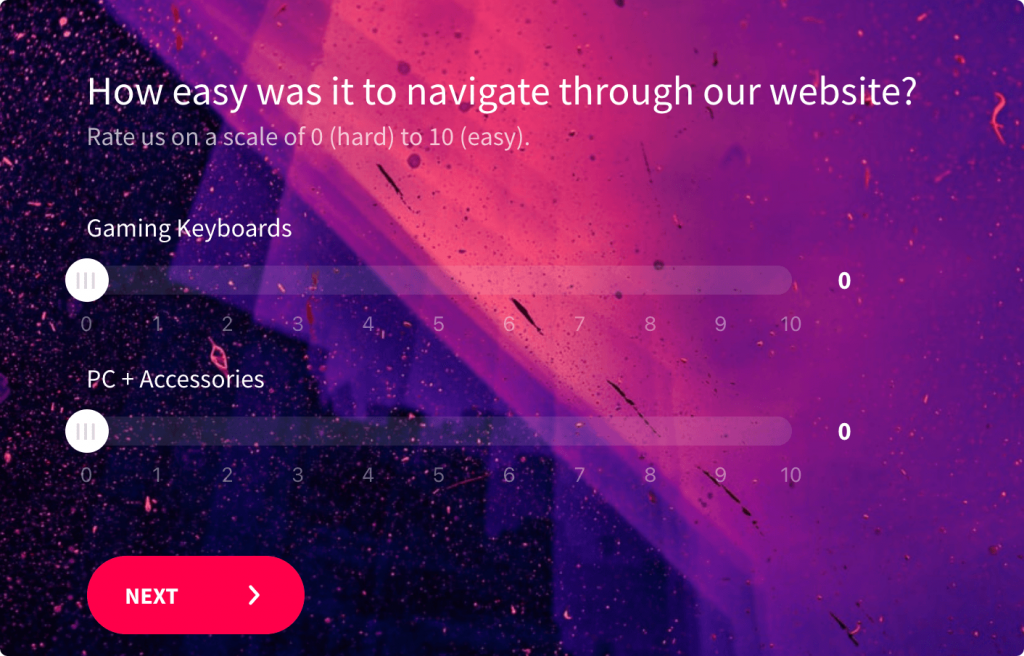
In this type, the question features a graphical slider. It offers an interactive way for the respondent to answer the differential scale question.
This type of semantic scale uses radio buttons. Non-slider rating scales are used when there are two or more answer options that are mutually exclusive. So the user must pick one choice only; clicking an unselected radion button will deselect the previously clicked button.
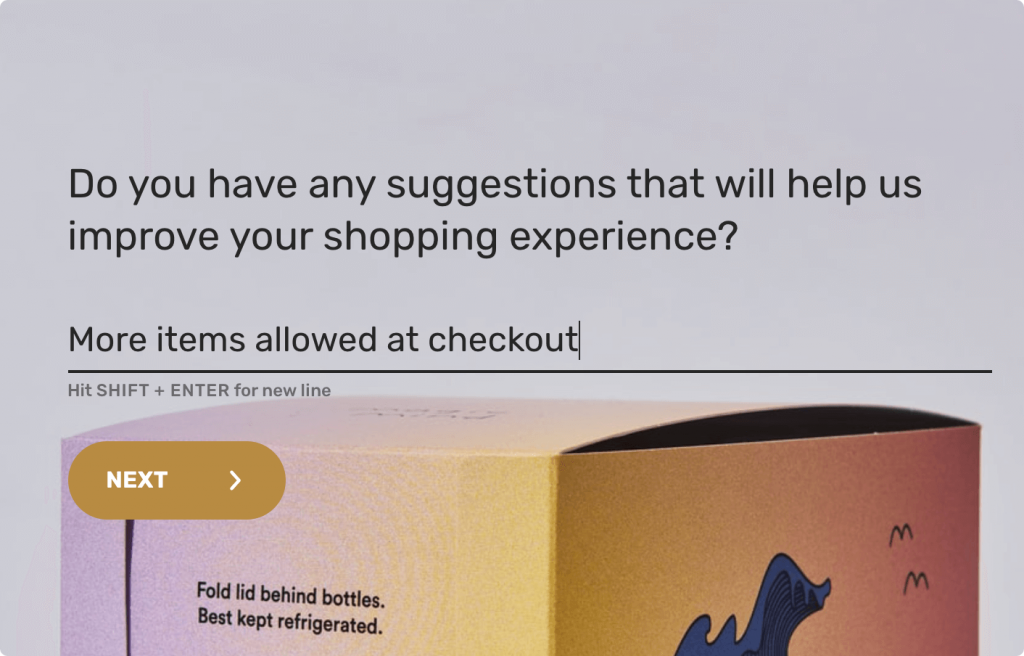
This question type gives the respondents ample space to express their thoughts about the brand or a particular touchpoint. What’s more, open-ended responses are helpful for text and sentiment analysis.
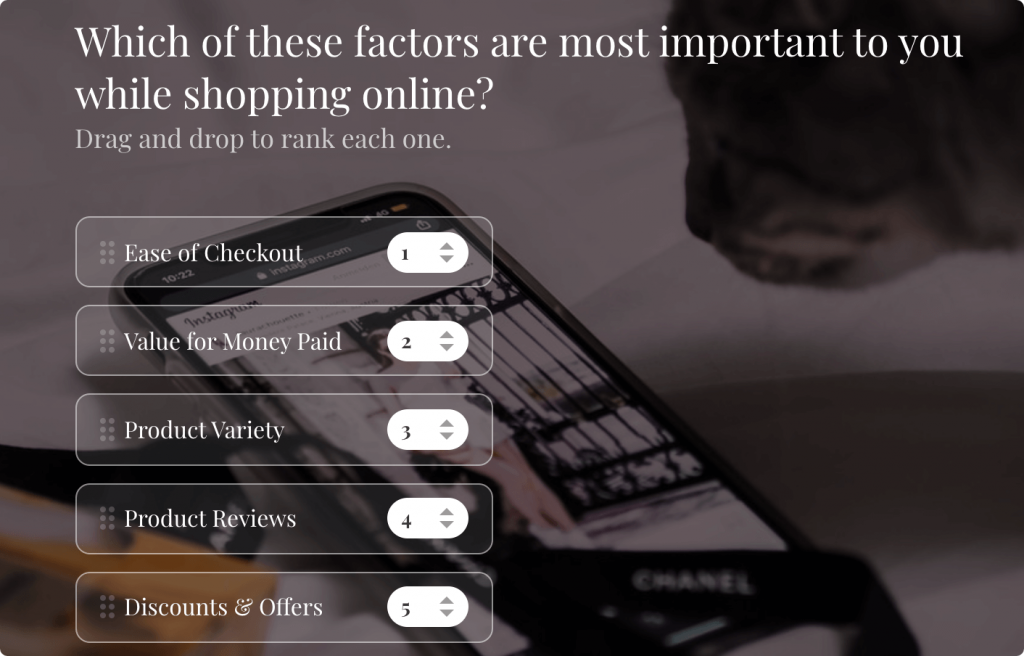
In the ordering type question (also known as the rank order question) respondents can rank the options for a specific variable.
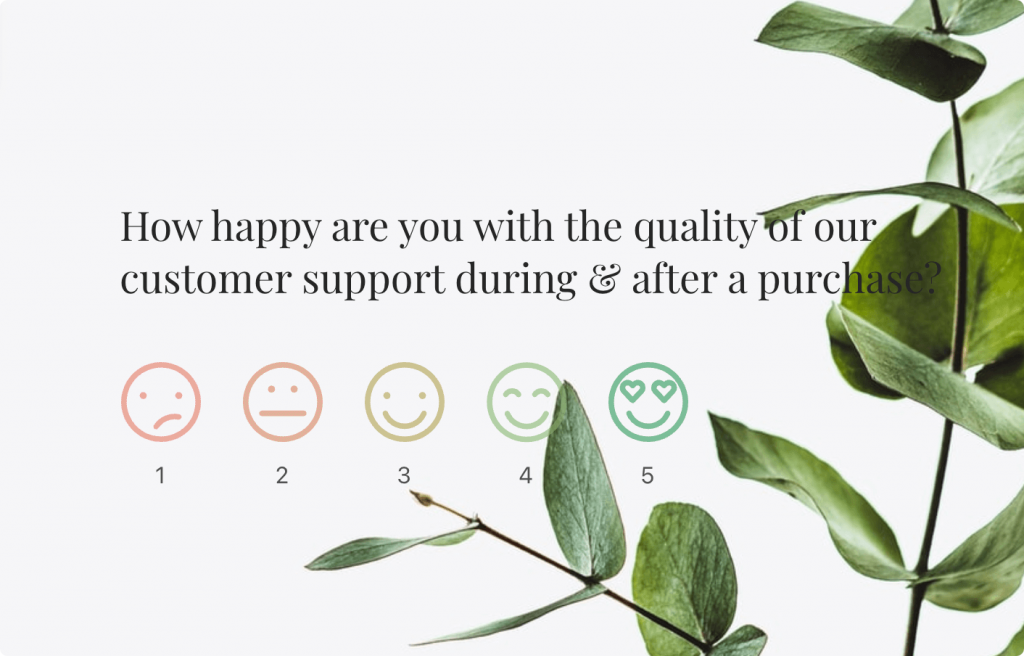
In one of the easiest ways for customers to respond, this type of question uses emojis to express values.
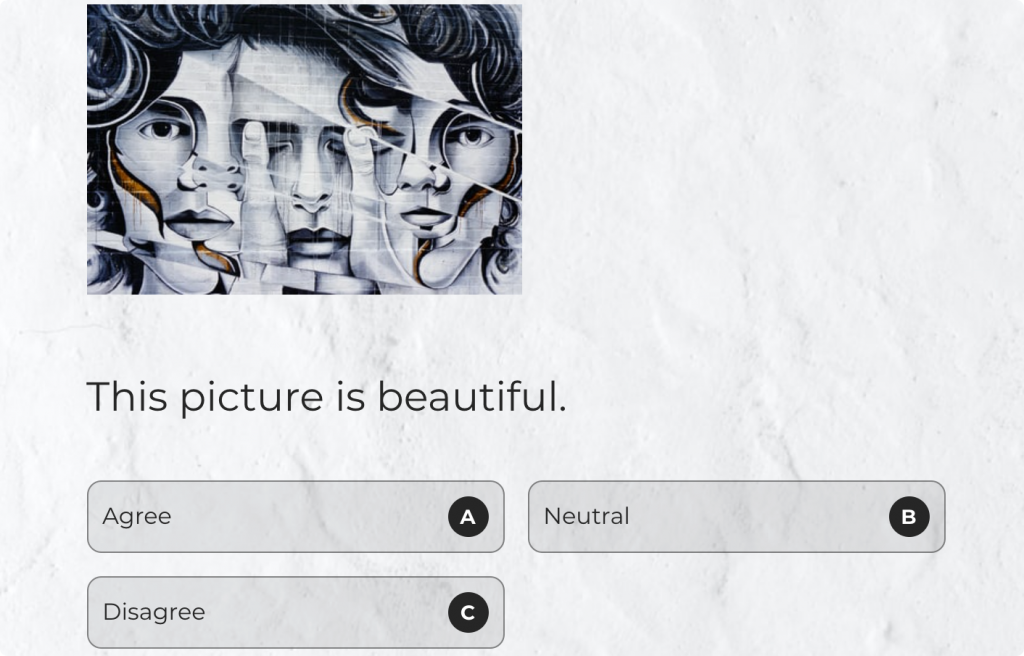

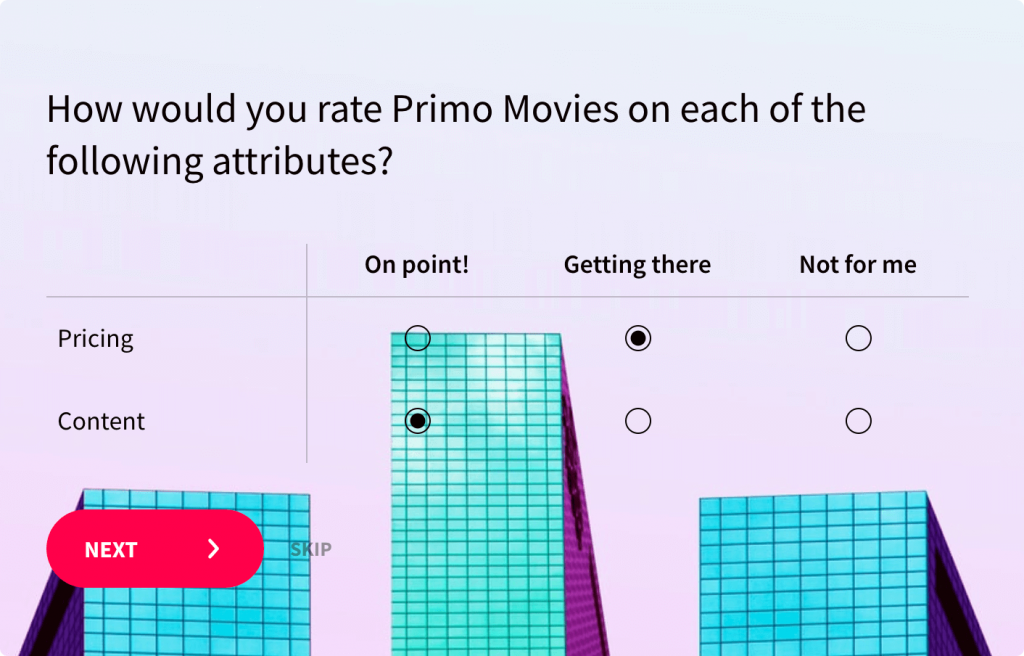
Since a semantic differential scale questionnaire is easy to take, the respondents often answer in more detail. As a result, it leads to more accurate and statistically significant results.
As a survey question, it is easy to craft. However, since the the answers are subjective, watch out for any inherent bias while framing the answer options.
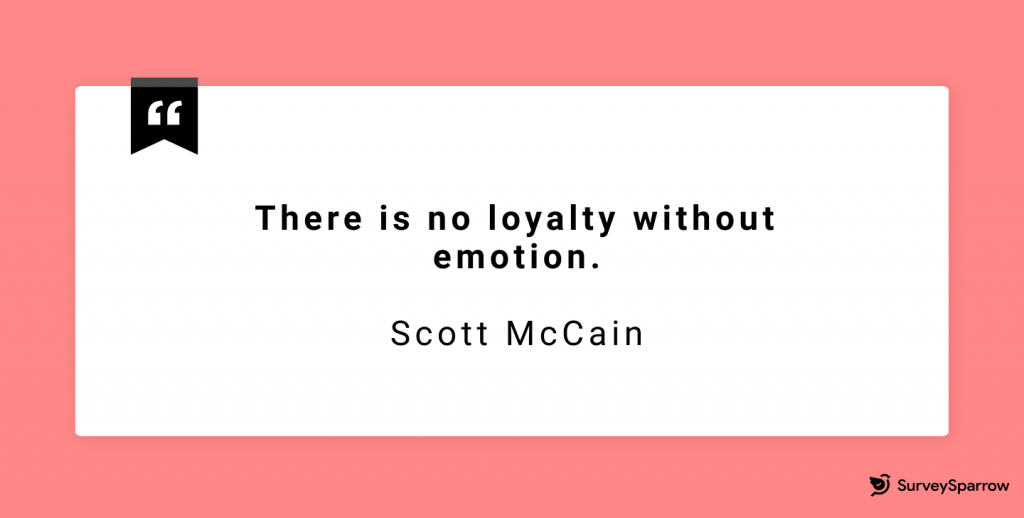
Emotions decide loyalty. This loyalty plays a crucial role in purchase decisions, recruitment, customer and employee retention, and brand value. Thus, semantic scales help you measure the emotions that underlie loyalty and dissatisfaction. This is powerful information indeed.
Because attitudes underlie everything, the uses of semantic scales are potentially limitless. Some examples include:
Through software like SurveySparrow, businesses accordingly use this scale to measure products, services, organizations, experiences, ads, and more. You can create your own with a free account.
What’s more, you can use different filters and widgets on the dashboard of the online survey tool to view specific results. For example, you can view trend analysis and see if any patterns deserve your attention.
You can use a semantic differential scale for a variety of reasons, but primarily for the following:
Confused? Let’s walk you through an example.
When a customer’s response to a question about customer service is “bad”, but the overall satisfaction rating is “high”, the customer is happy with the product/service. But some aspects of the customer service did not meet their standards. So follow up with an open-ended question to find out more.
For those looking to understand their customers’ attitudes, the semantic scale is a powerful tool that can be framed in different ways. While it requires a bit of care to avoid questioner’s bias, it is well worth the effort. That’s because the results can help you bring about the changes you need to increase customer loyalty. After all, in the words of Shep Hyken:
People think of loyalty as customers for a lifetime. But it’s really much simpler than that. It’s about the next time, every time.


Thousands of brands trust SurveySparrow to turn feedback into growth. Try it free today!


Best Of
14 MINUTES
2 January 2021

Best Of
13 MINUTES
29 April 2024

Best Of
20 MINUTES
26 September 2020

Best Of
23 MINUTES
30 August 2021
14-day free trial • Cancel Anytime • No Credit Card Required • No Strings Attached

