Knowledge
Kano Model: Decoding Features for Customer Satisfaction

TRUSTED BY BEST-IN-CLASS BRANDS



Customer satisfaction is the holy grail now. And the Kano Model stands out as a powerful tool for prioritizing features that truly matter to them.
But what exactly is the Kano Model, why is it used, and how can it elevate your business game?
Let’s get started, shall we?
What is the Kano Model?
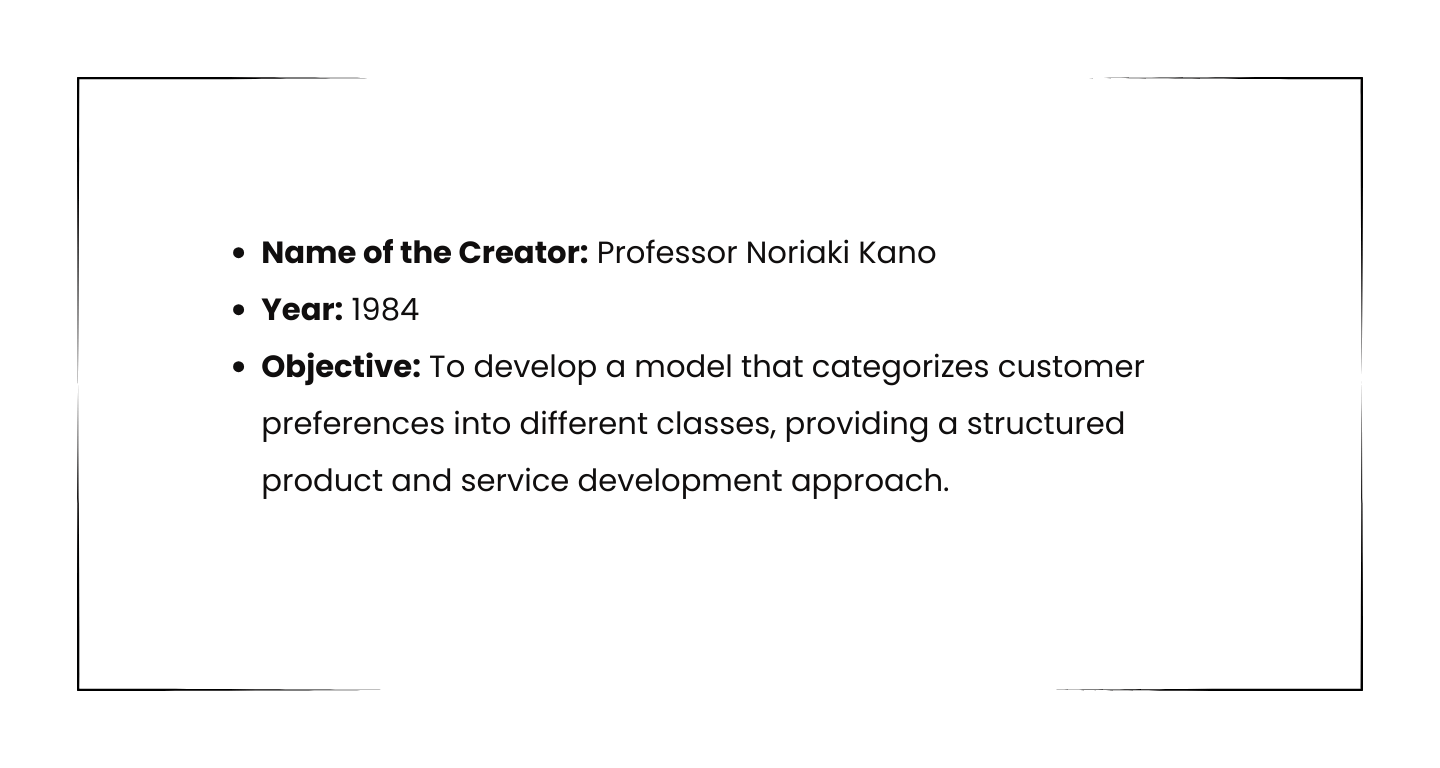
The Kano Model, named after its creator, Professor Noriaki Kano, is a framework designed to prioritize and analyze features based on customer satisfaction.
Now, imagine you’re running a restaurant. Your customers expect a tasty meal—nothing fancy, just good food. That’s the basic expectation, right? Now, picture surprising them with a complimentary dessert, something they didn’t anticipate. That unexpected delight is what the Kano Model is all about.
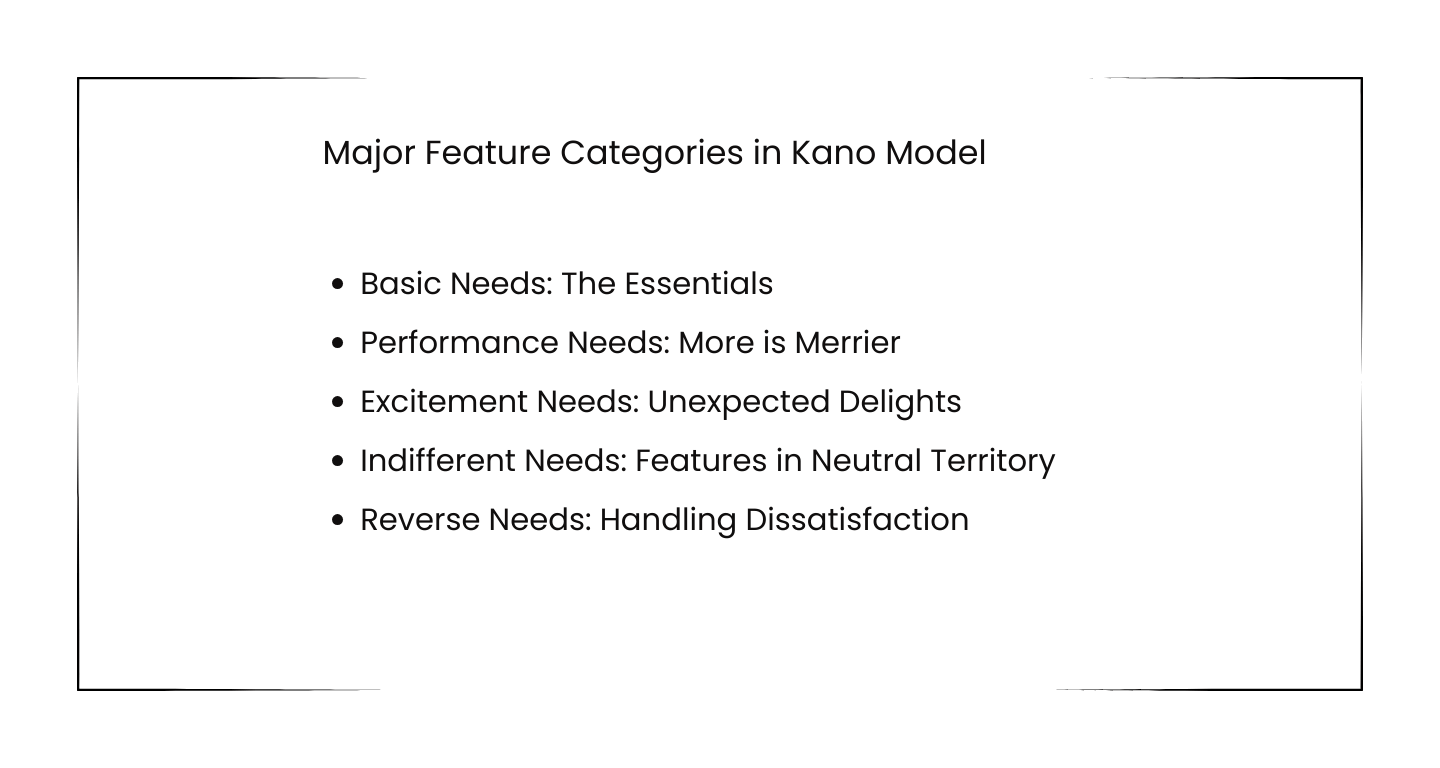
Now, let me take the restaurant analogy a little further. It sorts features into five groups:
- Basic Needs: The essential stuff customers expect, like a clean restaurant.
- Performance Needs: The more you offer, the happier they are.
- Excitement Needs: The unexpected delights, like that complimentary dessert.
- Indifferent Needs: Features that don’t significantly sway satisfaction.
- Reverse Needs: Things that, if present, make customers unhappy. But their absence doesn’t bother them.
Dont worry. We’ll look into them in detail.
What are the five requirements of the Kano Model?
When it comes to product or service development, understanding customer expectations can be a little tricky. This is precisely why you need the Kano model. It provides a systematic approach by classifying features into five distinct categories. Moreover, each of them has their unique features.
1. Basic Needs: The Essentials
It represents the fundamental features customers expect as a standard. Think of these as the bare necessities that, when met, establish a baseline level of satisfaction. Failure to fulfill Basic Needs results in immediate dissatisfaction.
For instance, consider the scenario of purchasing a smartphone. Basic Needs in this context include the expected functionalities such as a reliable battery life, a clear and responsive display, and the ability to make and receive calls seamlessly. These are the prerequisites, the features that, if absent or subpar, would result in immediate dissatisfaction.
Businesses must recognize and fulfill basic needs impeccably because meeting these expectations establishes minimum satisfaction. Falling short in delivering them can quickly erode customer trust and loyalty.
Key Elements:
- Reliability: The assurance that the product or service works consistently, like a dependable car engine.
- Functionality: Ensuring the product does what it’s meant to do, such as a phone making reliable calls.
- Usability: The product should be easy for customers to use. e.g., A TV remote with clear buttons for simple navigation.
- Performance: Meeting fundamental performance expectations. This ensures efficient operations like a vacuum effectively cleaning.
- Safety: In products where safety matters, providing essential safety features, such as reliable brakes in a car.
2. Performance Needs: More is Merrier
Performance Needs are the additional features that directly correlate with satisfaction. The principle here is straightforward – the more you offer, the higher the satisfaction level.
Businesses aiming to exceed customer expectations focus on enhancing performance features to create a more satisfying customer experience. Performance needs are about giving customers more of what they already like. It’s like having a smartphone that makes calls and has a fantastic camera. That makes it a joy to capture moments.
These are the features that, the more you offer, the happier customers get.
Key Elements:
- Enhanced Features: Offering more features beyond the basics to elevate satisfaction.
- Quality Improvement: Continuously improving existing features for a better overall experience.
- Innovation and Technological Advancements: Embracing cutting-edge technologies to stay ahead.
- Customization Options: Providing options for personalization to cater to diverse preferences.
- User Experience Enhancements: Improving overall user experience with faster, intuitive, and advanced features.
3. Excitement Needs: Unexpected Delights
Excitement needs include features beyond conventional expectations. They are positioned at the highest point of customer delight!
These are the unexpected treats that, when present, significantly elevate satisfaction. Identifying and incorporating Excitement Needs is the key to creating memorable and delightful customer experiences. Who doesn’t like a little bit of mystery? Right?
Key Elements:
- Novelty and Uniqueness: Introduce unexpected features, setting the product apart with innovative elements.
- Surprises and Delights: Incorporate elements that pleasantly surprise, creating moments of pure joy, like finding an Easter egg in software.
- Innovative Solutions: Manifest groundbreaking designs, revolutionary features, or unique service offerings that redefine the product.
- Personalized Experiences: Tailor the product or service to individual preferences, providing the satisfaction of a specially designed experience.
- Anticipation and Mystery: Build excitement by creating anticipation and a sense of mystery around features, enticing customers during product launches.
4. Indifferent Needs: Features in Neutral Territory
Indifferent Needs represent features that neither significantly contribute to satisfaction nor invoke dissatisfaction. These are aspects that customers acknowledge. But they don’t strongly influence their overall satisfaction. Strategic management of this requirement involves recognizing their neutral impact on customer sentiment.
Key Elements:
- Standard Packaging: Functional but not impactful packaging, existing in indifference.
- Primary User Interface: Essential yet not decisive for satisfaction, an Indifferent Need.
- Routine Maintenance Services: Necessary but without strong impact, residing in indifference.
- Common Design Elements: Functional but not satisfaction influencers in indifference.
- Basic Product Documentation: Essential but not a significant satisfaction factor, an “Indifferent Need!”
5. Reverse Needs: Handling Dissatisfaction
In a somewhat paradoxical twist, Reverse Needs represent features that, if present, can lead to dissatisfaction. However, intriguingly, their absence does not necessarily make any difference.
Businesses must proactively identify and address reverse needs to mitigate potential dissatisfaction and maintain a positive customer experience.
These features possess the potential to cause dissatisfaction when incorporated. Customers do not actively seek them, but they possess the potential to cause dissatisfaction when incorporated. Recognizing
Reverse Needs involves a keen understanding of aspects that, if included, may unintentionally detract from the positive customer experience. Recognizing Reverse Needs involves a keen understanding of aspects that, if included, may unintentionally detract from the positive customer experience.
Key Features:
- Intrusive Advertisements: Presence can lead to dissatisfaction; absence doesn’t actively contribute to satisfaction.
- Complicated User Interfaces: Complexity can cause dissatisfaction; its absence may not noticeably enhance satisfaction.
- Unwanted Automatic Updates: Intrusive updates can lead to frustration; their absence may not significantly boost satisfaction.
- Excessive Notifications: Overwhelming notifications can contribute to dissatisfaction; absence may not be a direct contributor to satisfaction.
- Aggressive Cross-Selling: Aggressive promotions may lead to dissatisfaction; absence is unlikely to be a defining factor in contentment.
When to Use the Kano Model
The model is highly beneficial in product and service development. It can be used at specific junctures where its unique insights can be utilized for strategic decision-making.
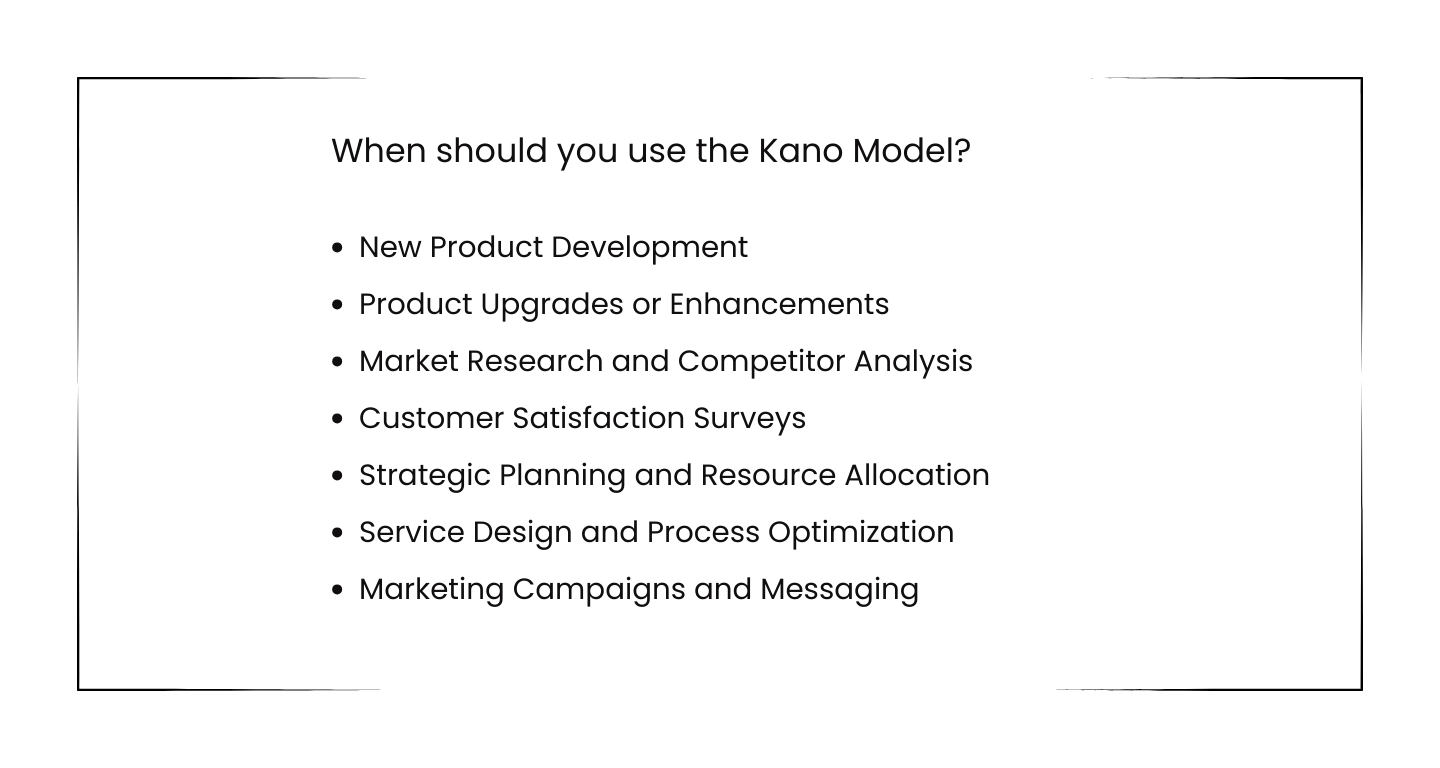
Knowing when to use the Kano model is essential for enhancing its effectiveness.
1. New Product Development
Use it when you are on the journey of new product development. It clarifies customer expectations, guiding the incorporation of features that align with Basic, Performance, and Excitement Needs. Plus, this is done while avoiding the potential pitfalls of reverse needs.
2. Product Upgrades or Enhancements
Employ the Kano Model when planning upgrades or enhancements to an existing product. It aids in prioritizing features, ensuring that improvements align with evolving customer expectations and preferences.
3. Market Research and Competitor Analysis
Integrate Kano Model Analysis into market research and competitor analysis. Understanding how certain features impact satisfaction levels helps identify competitive advantages and differentiate offerings effectively.
4. Customer Satisfaction Surveys
Implement the Kano Model in customer satisfaction surveys. By categorizing features based on their impact, businesses gain nuanced insights into areas that drive satisfaction, helping tailor strategies for continuous improvement.
5. Strategic Planning and Resource Allocation
Utilize Kano Model Analysis during strategic planning to optimize resource allocation. By identifying features that strongly influence satisfaction, businesses can allocate resources strategically, focusing on aspects that matter most to customers.
6. Service Design and Process Optimization
Integrate it when designing services or optimizing processes. It aids in understanding how different elements contribute to customer satisfaction, ensuring that service design aligns with customer expectations.
7. Marketing Campaigns and Messaging
Incorporate the insights into marketing campaigns and messaging. Highlighting features that resonate with Excitement Needs can enhance marketing effectiveness by creating compelling and memorable narratives.
Benefits of Using the Kano Model
With the analysis, you get:
1. Wise Choices, Happy Customers: The Kano Model guides decision-making with real insights, keeping your customers smiling with choices that truly matter to them.
2. Pick Wisely, Win Big: Sorting features into categories helps you pick winners, ensuring you put your resources where they count the most.
3. Customer Smiles, Mission Accomplished: Boost overall satisfaction by hitting the sweet spot of Basic, Performance, and Excitement Needs – a recipe for customer smiles.
4. Stand Out in the Crowd: Understand what makes your customers tick. The Kano Model gives you the edge to stand out in a crowded market.
5. Stay Awesome, Keep Adapting: Embrace a culture of continuous improvement. With the Kano Model, you stay fantastic by adapting to your customers’ wants, ensuring lasting success.
Now, to get insights, you need data. Advanced data collection tools such as SurveySparrow will help you climb the productivity ladder. The platform lets you create engaging surveys, share them on multiple platforms, collect valuable data, analyze it, and act upon the insights gained. All this is possible in one platform!
And it’s free to try!

Create conversational surveys with SurveySparrow
A personalized walkthrough by our experts. No strings attached!
Kano Analysis: Best Practices and Pro Tips
Though it sounds complex, the Kano Model can be easily implemented with the help of some expert guidance. Here are ten tips we came up with. Take a look, and see if it helps.
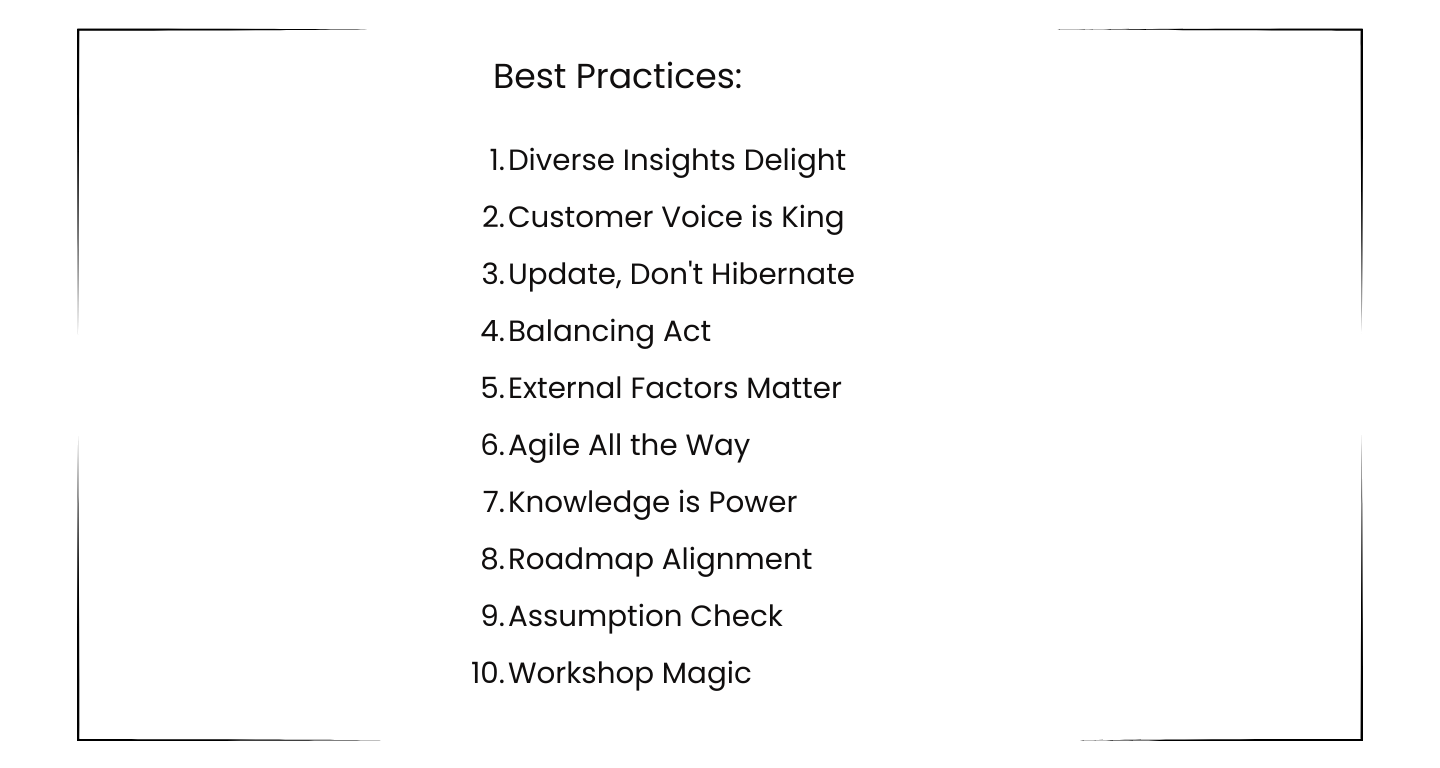
- Diverse Insights Delight: Tap into diverse perspectives within your team. A mix of opinions ensures a well-rounded understanding of customer needs.
- Customer Voice is King: Listen directly to your customers. Surveys, interviews, and focus groups are your treasure troves for valuable insights shaping your Kano Analysis.
- Update, Don’t Hibernate: Keep your analysis in sync with the times. Regular updates prevent your insights from gathering dust and ensure they remain relevant.
- Balancing Act: Juggle short-term wins and long-term goals. Meeting immediate needs is excellent, but don’t overlook the potential of Excitement Needs for future triumphs.
- External Factors Matter: Consider external influences. Industry trends and tech advancements play a role in shaping what your customers expect.
- Agile All the Way: Stay agile in your approach. Flexibility allows you to respond to customer feedback and market shifts swiftly.
- Knowledge is Power: Educate your team on the Kano Model. An informed team is an empowered team working towards common customer-centric goals.
- Roadmap Alignment: Embed Kano Analysis into your product development roadmaps. Let customer needs guide the journey to your product’s future.
- Assumption Check: Challenge assumptions. Validate your hypotheses with accurate customer data to avoid missteps and make informed decisions.
- Workshop Magic: Host Kano workshops. Collaborative sessions breed a shared understanding of customer needs and spark innovative solutions.
Read More: The Ultimate Guide to Customer Experience Workshop
How to Apply the Kano Model
#1 Set the Stage – Define Objectives:
Lay out your goals. Are you tweaking a current product or unleashing something entirely new? Define the mission.
#2 Talk Shop with Your Users:
Get honest with your customers. Surveys, interviews, and feedback sessions are your tools to understand what they truly want.
#3 Create Your Kano Grid:
Break out the grid. Features go into Basic, Performance, Excitement, or Reverse categories. Think of it as sorting your toolkit.
#4 Roll Out the Priority List:
Prioritize like a boss. Basics take the lead, Performance follows, and Excitement adds the spice. Reverse? Keep an eye on those potential headaches.
#5 Tackle the Trouble – Reverse Needs:
Identify issues before they become problems. Those Reverse Needs might need a little superhero intervention.
#6 Strategically Deploy Resources:
Resources are like your team of superheroes. Deploy them strategically based on your priority list. There are no wasted efforts here.
#7 Action Time – Implement Changes:
Action speaks louder than words. Implement changes systematically. It’s like upgrading your superhero gear for the big battle.
#8 Stay Sharp – Monitor and Adapt:
Don’t sleep on the job. Keep an eye on customer feedback. Adapt your strategies to stay ahead of the game.
#9 Educate Your Squad:
Your team needs to be on the same page. Educate them on the Kano Model. A knowledgeable team is a powerful one.
#10 Keep the Wheel Turning – Continuous Improvement:
It’s not a one-time thing. Embrace continuous improvement. Keep refining and adapting based on customer needs.
Wrap Up!
Kano Model acts as a strategic compass. Remember, it’s a journey, not a destination. Continuously adapt, innovate, and keep your customers at the heart of it all. Your success lies in their satisfaction.
You’re meeting and exceeding expectations by understanding and addressing Basic, Performance, Excitement, Indifferent, and Reverse Needs.
Insights are crucial to the success of any organization. Make use of SurveySparrow to gather valuable insights for informed decisions.
Sign up for free today!
Create conversational surveys with SurveySparrow
A personalized walkthrough by our experts. No strings attached!