Customer Experience
Frictionless Customer Experience: Unlocking Seamless Connections for Your Business

Article written by Kate Williams
Content Marketer at SurveySparrow

12 min read
30 May 2024


Customer Experience
Article written by Kate Williams
Content Marketer at SurveySparrow
12 min read
30 May 2024
Have you ever wondered what makes some businesses effortlessly stand out, captivating their customers at every touchpoint, while others struggle to keep up? The answer lies in the concept of a frictionless customer experience. Imagine a world where your interactions with a company are seamless, intuitive, and devoid of any unnecessary hurdles. This is the hallmark of a truly remarkable customer journey.
In this blog, we’ll look into the essence of frictionless experience, understand its significance, and learn the steps to achieve it. Let’s delve into the heart of customer-centricity and discover how your business can soar to new heights.
At its core, a frictionless customer experience refers to the seamless, hassle-free interactions a customer has with a brand throughout their journey. It’s the art of eliminating unnecessary barriers and making every step—from initial engagement to post-purchase support—feel effortless. Just imagine visiting a website where navigation is intuitive, finding information is a breeze, and purchasing is as simple as a single click. That’s the essence of a frictionless experience.
Read More: Customer Experience Best Practices: 10 Tips to Improve CX Today
The term frictionless, in business takes on a broader meaning. It encompasses the streamlining of processes, workflows, and communication to create a smoother operational environment. When businesses operate with reduced friction, they become agile, responsive, and capable of delivering exceptional value to both customers and stakeholders.
For instance, the adoption of collaborative tools like Slack or Microsoft Teams can transform the way teams communicate, share ideas, and work together. This digital evolution reduces friction in communication and boosts productivity across the organization.
Friction in the customer experience can arise from various sources, and identifying these pain points is crucial for effective resolution. Common culprits include complex user interfaces, lengthy and confusing forms, a lack of personalization, and inadequate customer support. By pinpointing these sources of friction, businesses can devise targeted strategies to address them head-on.
A classic example is the frustration customers feel when they have to navigate through a labyrinth of automated phone menu options before reaching a human customer service representative. This unnecessary detour creates friction and erodes the overall experience.
Let’s look at the causes in detail-
Complicated website layouts or mobile app interfaces can confuse customers and make it difficult for them to find what they need. If users struggle to locate products, information, or services, they may become frustrated and abandon their interactions.
Forms that require excessive information or present confusing fields can lead to friction. Customers may abandon transactions or registrations if they perceive the process as time-consuming or unclear.
Customers expect brands to understand their preferences and tailor experiences accordingly. When interactions lack personalization—such as generic recommendations or irrelevant content—it can lead to disengagement and frustration.
Slow response times, unhelpful responses, or difficulty in reaching customer support agents can create negative experiences. Customers who encounter roadblocks when seeking assistance may feel unsupported and dissatisfied.
If the payment process is confusing, lacks transparency, or presents unexpected charges, customers may hesitate to complete transactions. A lack of payment options or security concerns can also contribute to friction.
When customers experience disparities in the brand experience across different channels (website, app, social media, and in-store), it can lead to confusion and frustration. Brands should ensure a seamless transition and consistent messaging across all touchpoints.
Slow website or app loading times can test a customer’s patience. Today, customers expect quick access to information and services. Delays can lead to abandonment.
Unclear or complicated terms and conditions, shipping policies, and return processes can lead to uncertainty and friction. Hidden fees or unexpected rules can create a sense of distrust.
The answer is simple: to foster loyalty and drive business growth. Customers are more likely to remain loyal to a brand that consistently provides smooth, enjoyable interactions. A frictionless customer experience enhances customer satisfaction, reduces churn, and compels customers to become advocates for your brand.
According to a study companies with a strong focus on customer experience outperformed the S&P 500 index by nearly 80%. This statistic underscores the financial impact of prioritizing frictionless experiences.
Again, why is it important?
The importance of a frictionless customer experience cannot be overstated. Today, when options abound and attention spans are fleeting, businesses must seize every opportunity to captivate and retain their audience. A frictionless experience not only differentiates your brand but also cultivates lasting emotional connections with your customers.
Consider Apple’s seamless integration of its products and services. From iPhones to MacBooks to iCloud, Apple creates an ecosystem that minimizes friction between devices, ensuring a cohesive user experience.
Achieving a frictionless customer experience requires a strategic approach. Here’s a roadmap to guide you on your journey toward creating seamless interactions:
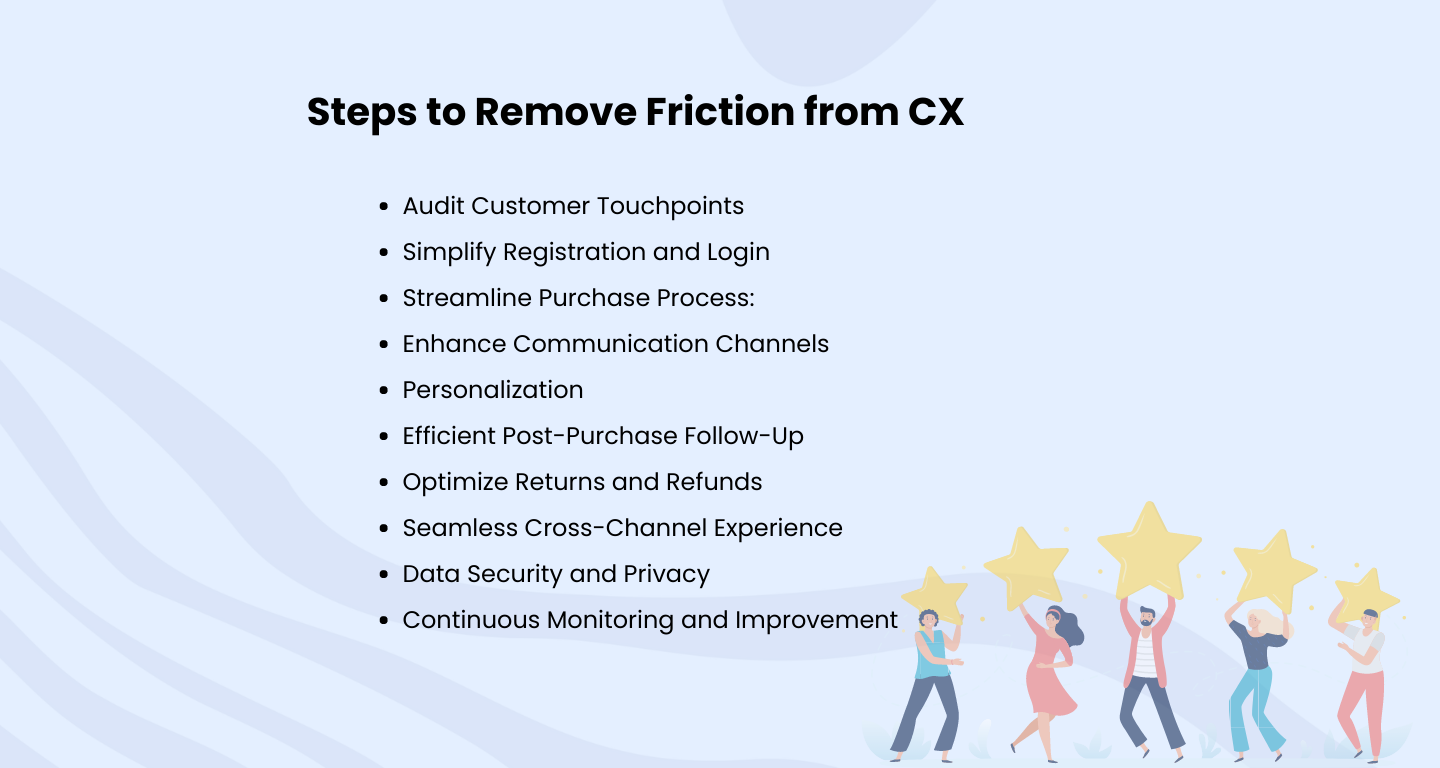
In marketing, a frictionless approach revolves around creating seamless and captivating campaigns that guide customers effortlessly through the buying journey. It’s about delivering the right message at the right time through the right channels, ensuring that every interaction resonates and contributes to a cohesive narrative.
Take the case of Spotify’s personalized playlists. By curating music selections based on individual preferences, Spotify reduces the friction of searching for the perfect song and enhances the user’s enjoyment of the platform.
As customer expectations surge, the concept of frictionless customer experience has emerged as a critical differentiator. This journey towards seamlessness isn’t just about convenience; it’s about nurturing lasting connections with your audience. By simplifying interactions, streamlining processes, and focusing on personalization, you can elevate your brand from being a mere option to becoming a preferred choice. And, before you leave, why not give SurveySparrow a try. Its free!


Thousands of brands trust SurveySparrow to turn feedback into growth. Try it free today!


Customer Experience
8 MINUTES
20 May 2022

Customer Experience
18 MINUTES
29 March 2023
Best Of
17 MINUTES
14 May 2024
Customer Experience
8 MINUTES
22 July 2019
14-day free trial • Cancel Anytime • No Credit Card Required • No Strings Attached
14-day free trial • Cancel Anytime • No Credit Card Required • No Strings Attached

