Knowledge
Close Ended Questions: Precise Insights & Effective Surveying

TRUSTED BY BEST-IN-CLASS BRANDS



Let me pose a question to you: Why do some surveys excel at extracting meaningful and valuable data effortlessly? How do some companies know their audiences like the back of their hand? The answer lies in the questions they ask. Well, when it comes to questions, there are primarily two types: open-ended and close-ended questions.
This blog will go into the nuances of close-ended questions. We’ll deal with everything from its meaning to the best practices to follow while incorporating them into a survey.
Off we go!
Why The Right Questions Matter
Questions aren’t just conversation starters. If you think about it, they are the stepping stones to knowing someone or something inside out! And again, questions aren’t just words on a survey. They pave the way for businesses to tap into the minds of their customers.
However, crafting the right questions is crucial. They have tremendous power in shaping the entire survey experience.
- Firstly, it dictates the quality of insights you gain. Strategically framed questions open the doors to nuanced and detailed responses. After all, it is primarily about the depth and the quality of the data collected. Right?
- Second, you should not consider a survey a set of random questions. Thoughtfully crafted questions contribute to a positive user experience. Moreover, each question must be aligned with the objectives you aim to achieve.
While open-ended questions invite elaborate responses, close-ended questions are designed for concise answers. The key here is precision.
Hey, let’s admit it. The age-old survey pattern has lost its charm. A big chunk of us have the memory of a goldfish, and let’s not even talk about our attention span. Conversational surveys speak volumes in this scenario. Platforms such as SurveySparrow let you create engaging surveys effortlessly, share them on multiple platforms, and analyze and act upon the collected data. Yes, all on one platform.

Create conversational surveys with SurveySparrow
A personalized walkthrough by our experts. No strings attached!
What are Close-Ended Questions
Close-ended questions are a structured form of inquiry that limits respondents to specific answer choices. So, they present you with a set of predefined options. But why, though?
The intention is to streamline the response process. Clear and concise options make it easier for respondents to answer promptly and ensure uniformity in the collected data.
Now, would you not like to have a set of clear and concise responses to choose from when you have little time? Similarly, how easy would it be to get systematic and uniform responses while assessing a survey?
Close-ended questions bring a sense of order to the otherwise chaotic landscape of survey responses. They are equally valuable for survey creators as they are for respondents.
Types of Close-Ended Questions
They come in various forms and types. Let’s talk about the most important ones among them.
1. Multiple Choice Questions
Multiple Choice Questions, or MCQs, are pretty straightforward. They are a commonly used format in surveys.
Now, imagine MCQs as a menu of choices to suit the survey objectives. Respondents are given a chance to select from a set of provided options. There is no need to generate responses from scratch!
For instance, take this question:
What is your preferred mode of transportation?
- Car
- Bus
- Bicycle
- Walking
How easy was that? You did not even have to think for more than a few seconds to respond. Why? Because you already have it partially answered for you. All you need to do is choose!
2. Likert Scale Questions
It is all about being yay or nay! It is used to gauge the intensity of agreement and disagreement on a particular statement. Respondents are given a scale ranging from “strongly agree” to “strongly disagree.” This lets them express the strength of their sentiments.
Look at this Likert scale questionnaire template, for example:
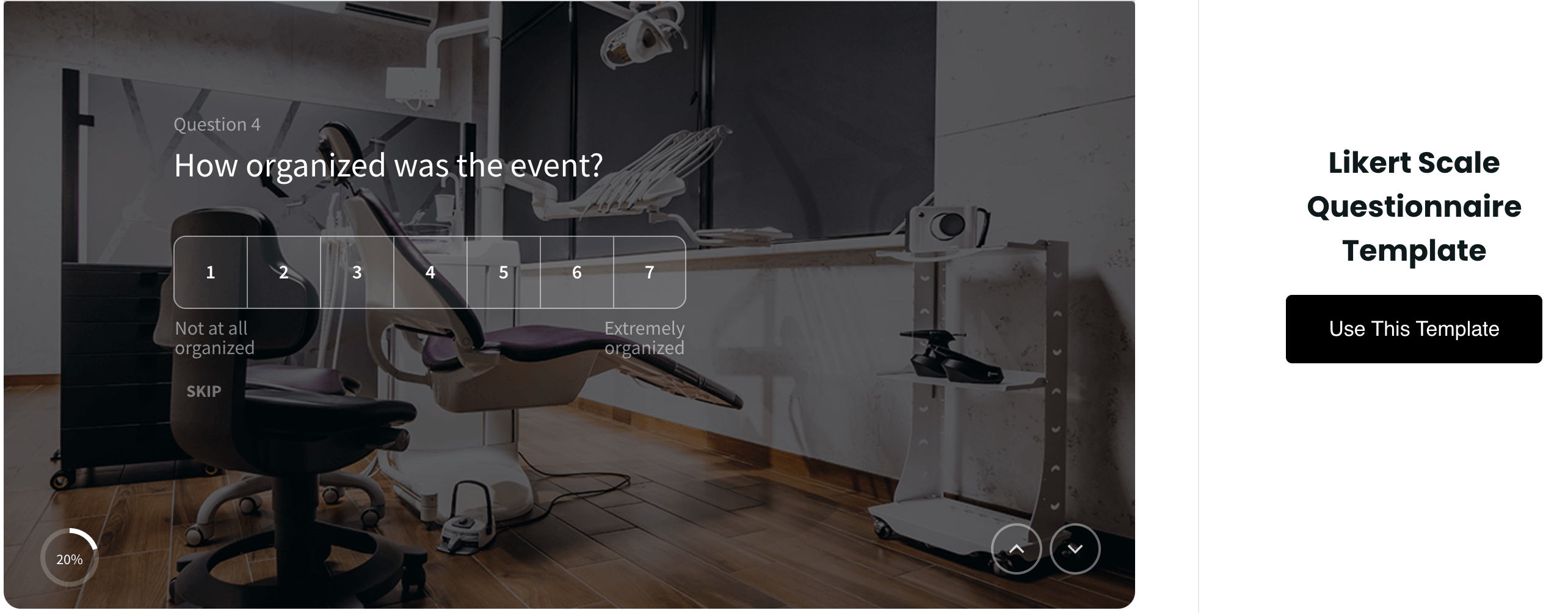
Respondents can convey their satisfaction level but at a much more nuanced level. This allows for a more detailed understanding of their interests and preferences.
3. Rating Scale Questions
Rating scale questions are akin to giving a grade or score to a particular attribute or experience. It allows respondents to assign a value to express their perception, satisfaction, or preference regarding a specific aspect. This gives it a structure.
This is a rating scale template created with SurveySparrow:
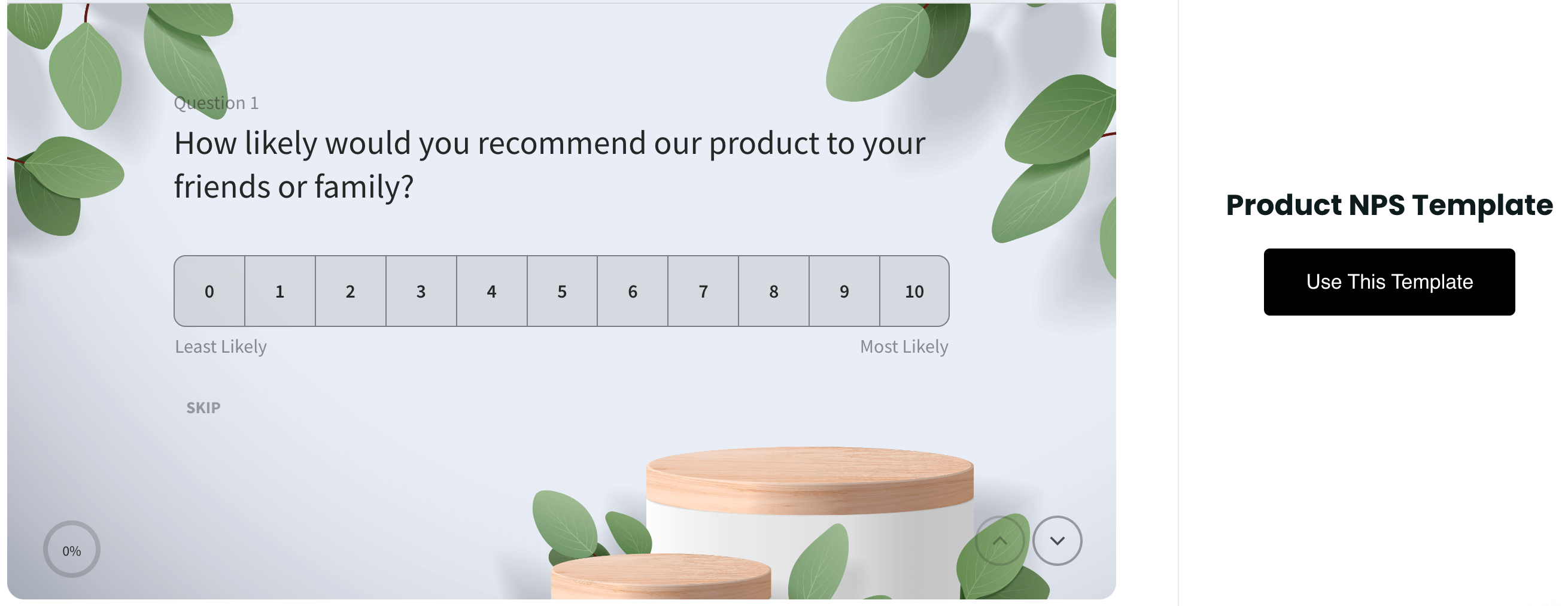
If you look at this Net Promoter Score survey question, respondents can assign a numerical rating that reflects their likelihood of recommending the product.
It captures the degree of positivity or negativity associated with the product. Thus, they are essential to quantifying impressions.
3. Checklists
Think of checklist-type questions as a way to get an idea about your preferences or opinions. Respondents can navigate the provided list and select the items that resonate with their experiences.
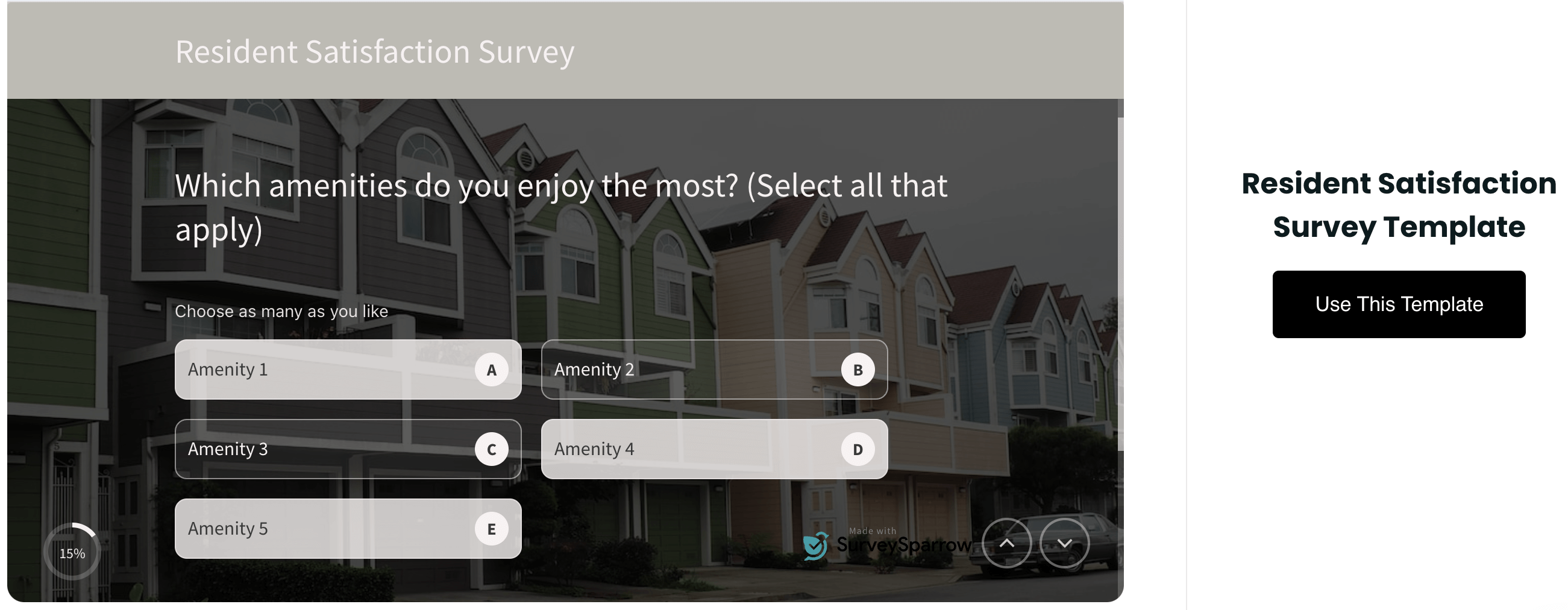
These questions streamline gathering information about specific choices within a defined set. Here, respondents can mark the valuable features. This provides a concise and organized overview of their preferences. It is flexible yet structured.
4. Rank In Order Questions
Here, you have to prioritize items in order of your preference. Unlike traditional questions, ranking in order invites respondents to do more than respond.
Instead of picking your favorites, you get to decide which one comes first, second, and so on.
It’ll look something like this:
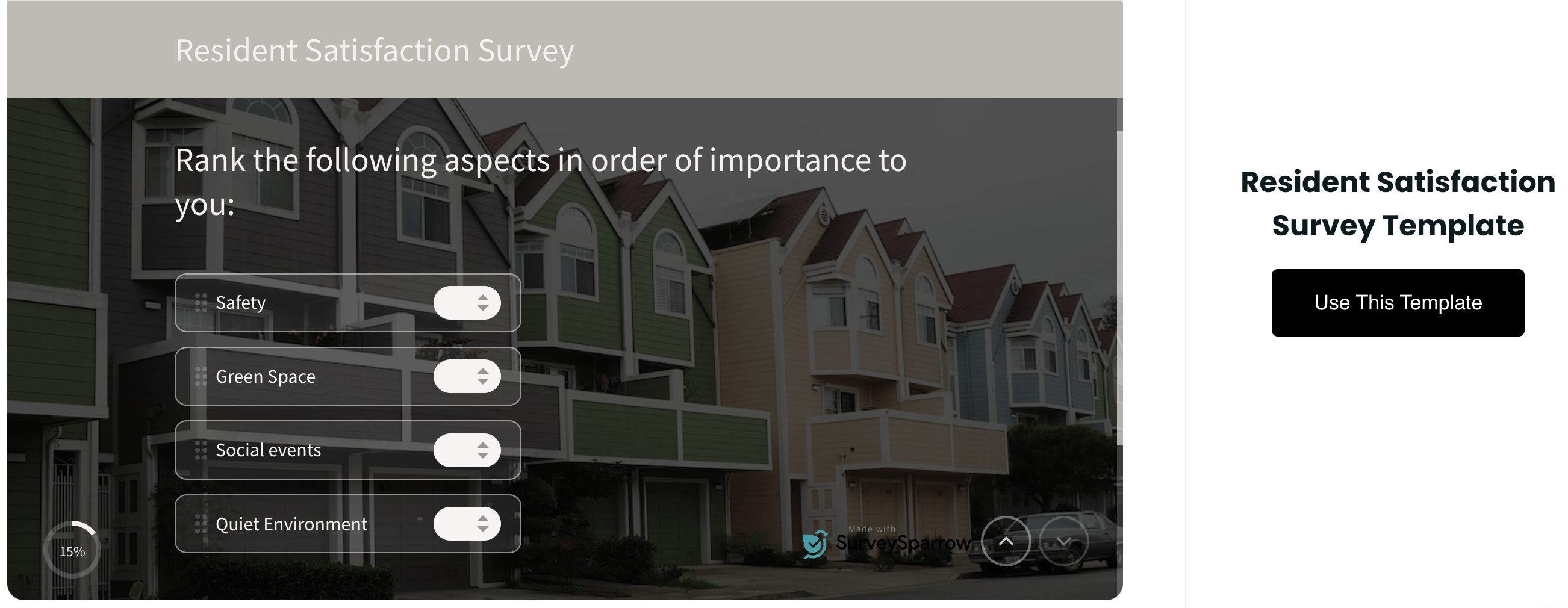
Think of it like making a to-do list, but cooler. You give each item a number based on how important it is to you. It’s your chance to say, “This one’s the top priority, followed by these.”
5. Matrix Questions
They are like a small survey magic trick. These questions let you group similar questions in a table. You can share your thoughts on multiple related topics all in one go.
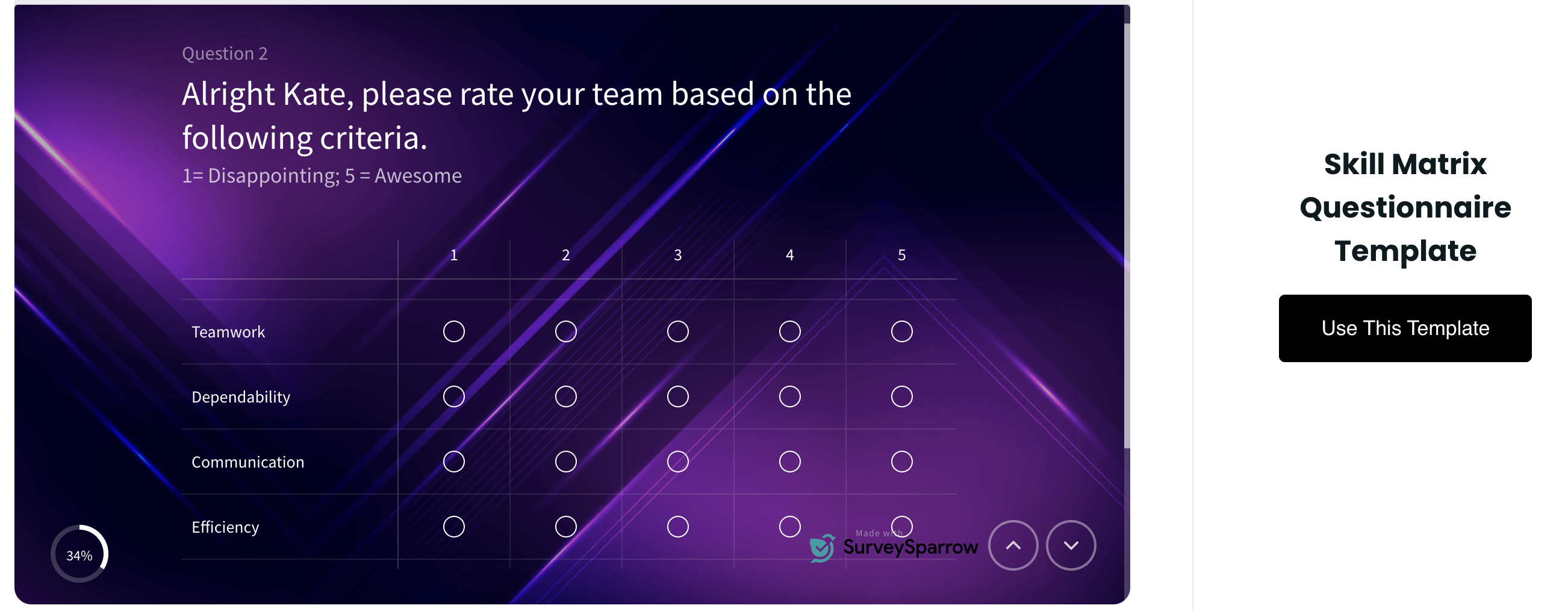
Instead of separate questions, you get one tidy table. Plus, it saves time! You can give your opinion on each aspect without feeling like you’re filling out a never-ending form.
Advantages of Close-Ended Questions
- Easy Analysis: Closed-ended questions provide clear responses. They streamline the interpretation process for effective decision-making.
- Time Efficiency: Respondents find closed-ended questions quick and easy to answer. Which quite literally results in higher survey completion rates and efficient data collection.
- Quantifiable Data: The structured format gives you quantifiable data. You get to make numerical or categorical analyses for actionable insights.
- Consistency Across Responses: The predefined options in closed-ended questions ensure consistent responses. There will be no more ambiguity in the survey results.
- Streamlined Data Collection: The survey-taking process is efficient, allowing opinions to be expressed without requiring lengthy explanations.
Disadvantages of Closed-Ended Questions
- Limited Depth: Closed-ended questions may lack the depth for comprehensive insights.
- Potential Bias: Predefined options can introduce bias by not covering the full range of respondent perspectives.
- Response Rigidity: Fixed choices may oversimplify opinions, not accounting for the diversity of experiences.
- Limited Adaptability: Closed-ended questions may struggle to capture unforeseen responses. This limits exploration.
- Design Challenges: Crafting practical closed-ended questions requires careful consideration to avoid misinterpretation.
Close-Ended vs Open-Ended Questions
| Aspect | Close Ended (CE) | Open Ended (OE) |
|---|---|---|
| Format | Structured | Unstructured |
| Response Type | Limited Options | Free-Form |
| Analysis | Quantifiable | Qualitative |
1. Format:
- CE: Closed-ended questions have predefined response options. For example, “Which of the following products have you purchased recently? (Select all that apply: A, B, C, D).”
- OE: Open-ended questions allow free-form, unrestricted responses. For instance, “Please share your thoughts on our product.”
2. Response Type:
- CE: Respondents choose from predetermined options. Example: “On a scale of 1-5, how satisfied are you with our service? (1: Not Satisfied, 5: Very Satisfied).”
- OE: They provide open, unrestrained responses. E.g., “What improvements would you suggest for our service?”
3. Analysis:
- CE: Responses are numerical or categorical, enabling quantitative analysis. For example, analyzing the average satisfaction rating.
- OE: They are descriptive, allowing for qualitative interpretation. An example would be reading through detailed customer feedback to understand sentiments.
Wrap Up!
So, in a nutshell, if you want quick and precise insights without the fuss, stick with close-ended questions. They get the job done—quick and precise.
So, close-ended questions are your trusty ally when you’re after straightforward insights without diving into the complexities. Ready to make your surveys work smarter, not harder?
Try SurveySparrow for free today!
Create conversational surveys with SurveySparrow
A personalized walkthrough by our experts. No strings attached!