Best Of
How to Ask the Right Gender Survey Questions on Sexual Orientation & Gender Identity

Article written by Aysha Muhammed
aysha

11 min read
24 June 2024


Best Of
Article written by Aysha Muhammed
aysha
11 min read
24 June 2024
If someone requested you to fit into a precise criteria or box that doesn’t truly represent who you are, would you rather do so?
It’s essentially a big no, right? We’ve all felt the strain of trying to fit into predetermined boxes, classifications, and criteria of who we truly are.
On the same note, I was wondering how it would feel if there were not enough gender options each time we take a survey. In the wake of the ever-evolving gender spectrum, we’ve come a long way from being perplexed about identities, unlearning certain stereotypes, and accepting more inclusive things.
But why do gender questions matter, and where will they be useful?
Let’s see.
Meanwhile, if you’re here for a set of gender survey questions, create a demographic or gender-based survey, jump into questions right below.
Looking for an example gender survey template? I’ve got that figured out, too.
Sign up with your email and get an already built gender survey template for free. You can customize it the way you want and start using it for free.
Now to the basics.
One of the survey question types, a gender survey question, is used to gather the gender of a respondent. Although these questions are commonly employed in a demographic survey, they are also widely used in several other types of research, such as business, social science, etc.
Gender survey questions basically help the evaluators understand if and how the respondents’ gender affects the choices and assist in identifying patterns, if any. While “male” and “female” remained the only plausible choices among survey makers, it’s no longer the case today.
Case in point, with changing norms around gender identity, people no longer shy away from answering gender questions if they feel they’re relevant to the demographic survey.
(Related: The 10 Best Demographic Survey Questions You Need to Ask)
In a 2015 study, scholars Laurel Westbrook and Aliya Saperstein, in their “ New Categories Are Not Enough: Rethinking the Measurement of Sex and Gender in Social Surveys,” elaborate on the driving need to reflect on the diversity of gendered lives and better align survey measurement practice with contemporary gender theory.
In a more recent study by Pew Research Centre, four in ten (42%) U.S. adults demand that when they’re presented with a form that asks about their gender, it should include options other than “man” and “woman.”
These data only indicate the rising consciousness of gender inclusivity and the demand for improving data accuracy by means of accurate data representation. If you don’t move along this hyper-gendered world, your survey results will remain erased of essential dimensions and will perpetuate inequality.

Asking about gender in a survey can be important for several reasons:
To ask about gender in a survey effectively and inclusively:
Remember, the approach should always be respectful and mindful of your respondents’ diverse experiences and identities.Now, let’s explore some of the examples of how you should curate questions based on gender.
As American University accurately puts it, “Often the questions are asked because we feel like they should be asked, or because we consider them ‘standard’ demographic questions, not because the data are necessary for cross-tabulation.”
But if you’re confident that gender is an important data point for your survey and want to explore the many ways in which you can add gender questions to your survey, here are some pointers to get started:
1. What is your gender?
2. What is your sex?
3. How do you identify your sexual orientation?
4. What pronouns would you prefer to use?

5. How comfortable do you feel expressing your gender identity in public spaces?
6. Is your workplace/ school gender inclusive?
7. Have you faced gender discrimination or bullying in your school or workplace?
8. How do you perceive societal attitudes toward non-binary individuals?
9. How confident are you to embrace your gender identity?
10. On a scale of 1-10, how comfortable and confident are you to discuss your gender identity at your workplace?
11. Have you ever had sex education at your school regarding gender identity and awareness?
12. Do you find it difficult to come out and embrace your gender identity?
13. Do you believe that your opinions on gender have changed over the past five years?
14. At what age did you become aware of your gender identity?
15. Are you aware of the LGBTQ+ Support organizations for Queer community?
16. Are there gender-neutral restrooms in your locality?
17. Are people around you generally supportive or understanding of Gender orientations?
18. What steps should society take to be more gender inclusive of diverse gender categories?
19. Please share any personal experiences related to your gender identity.
20. What is the biggest challenge facing individuals as they explore their gender identity?

Whatever gender options you have considered and then decided on using in your survey, you still need to ask these questions correctly to gain the most value from their use. Here are some pointers to consider in the process-
I understand why you’re asking about gender in the first place
Grasping the motive for asking the gender question is a crucial part of the process. Keep your target audience and data-analysis goal in mind while framing the questions.
Throughout the process, you’ll want to weigh in on your information needs and how your respondents will perceive the question. Enough said, you can safely skip these questions unless it is not needed for your data analysis.
If you decide to ask the question, remember to tread carefully
In all earnestness, gender is often a sensitive and misunderstood subject. That’s why it’s important to reflect and introspect on questions such as
You also want to be careful not to have it mangled loosely with often wrongly interchanged terms such as “sex” or “sexual orientation.” Doing this will enrage your respondents and force them to opt out of the survey instantly.
“Do it less, and we have a problem; overdo it, and you’ll find yourself with a bigger problem at hand” is how we can best describe this use case. As much as inclusivity is indispensable, it should not happen at the cost of fatiguing your survey respondents.
On that note, here are gender survey questions to avoid:
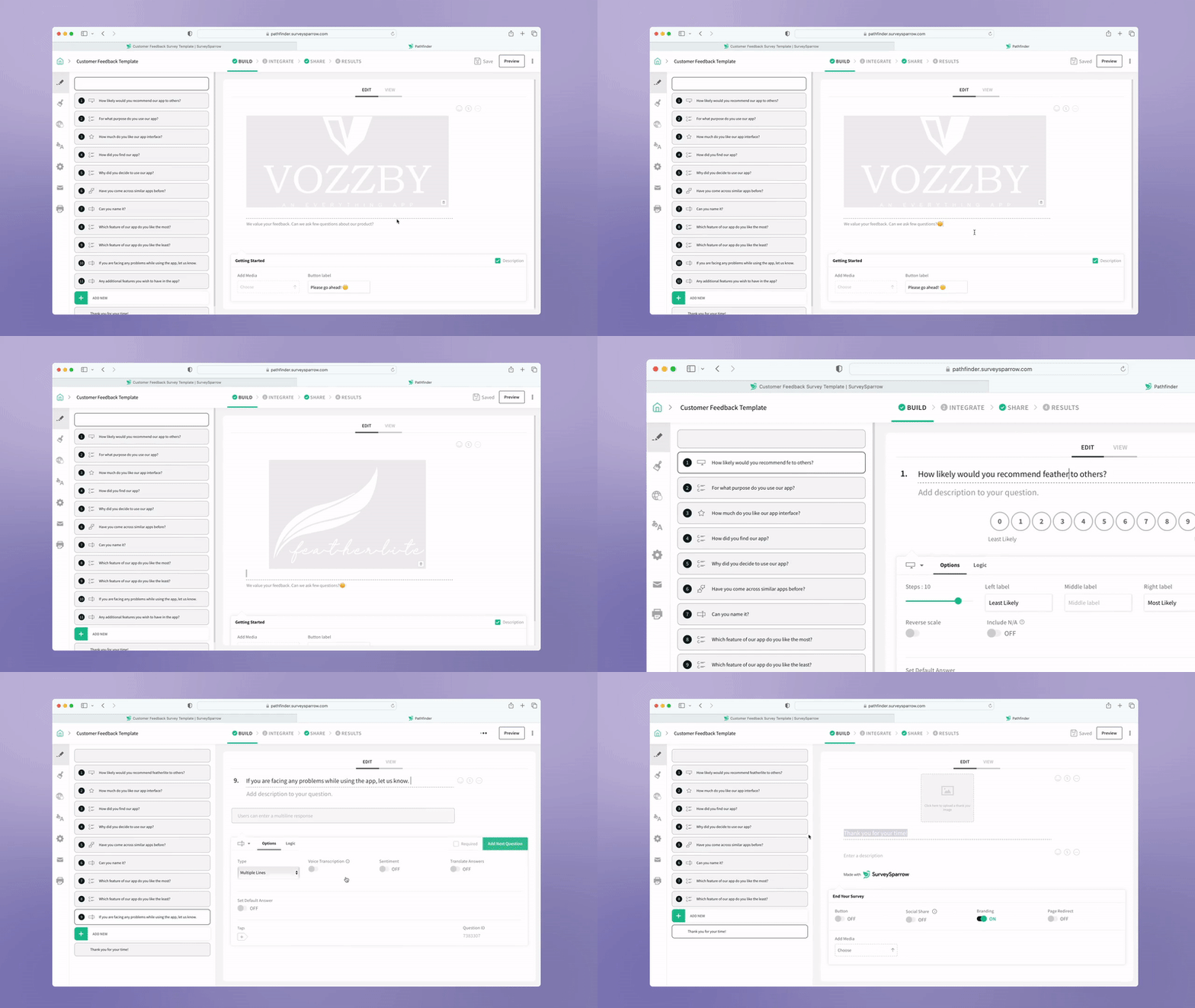
To effectively use the SurveySparrow gender survey questionnaire:

A personalized walkthrough by our experts. No strings attached!
Asking about gender in your survey isn’t always necessary. But sometimes, most times, when included, it contributes to the richness of data.
Now that more and more people are comfortable with their gender identity and sexual orientation, there has never been a better time to collect them. In fact, when researchers at the Census Bureau conducted an experiment asking respondents how they felt responding to the question on gender, nearly everyone(90%, to be exact) said they were comfortable answering them.
With a survey tool such as SurveySparrow, approaching gender survey questions is made easier than ever. With pre-made templates for every use case, versatile question types, and a conversational interface, you get to send out thoughtful surveys that resonate with your audience.
Good luck!


Thousands of brands trust SurveySparrow to turn feedback into growth. Try it free today!


Best Of
17 MINUTES
24 June 2022
Best Of
21 MINUTES
9 August 2018

Best Of
16 MINUTES
5 April 2022

Best Of
9 MINUTES
19 August 2020
14-day free trial • Cancel Anytime • No Credit Card Required • No Strings Attached

